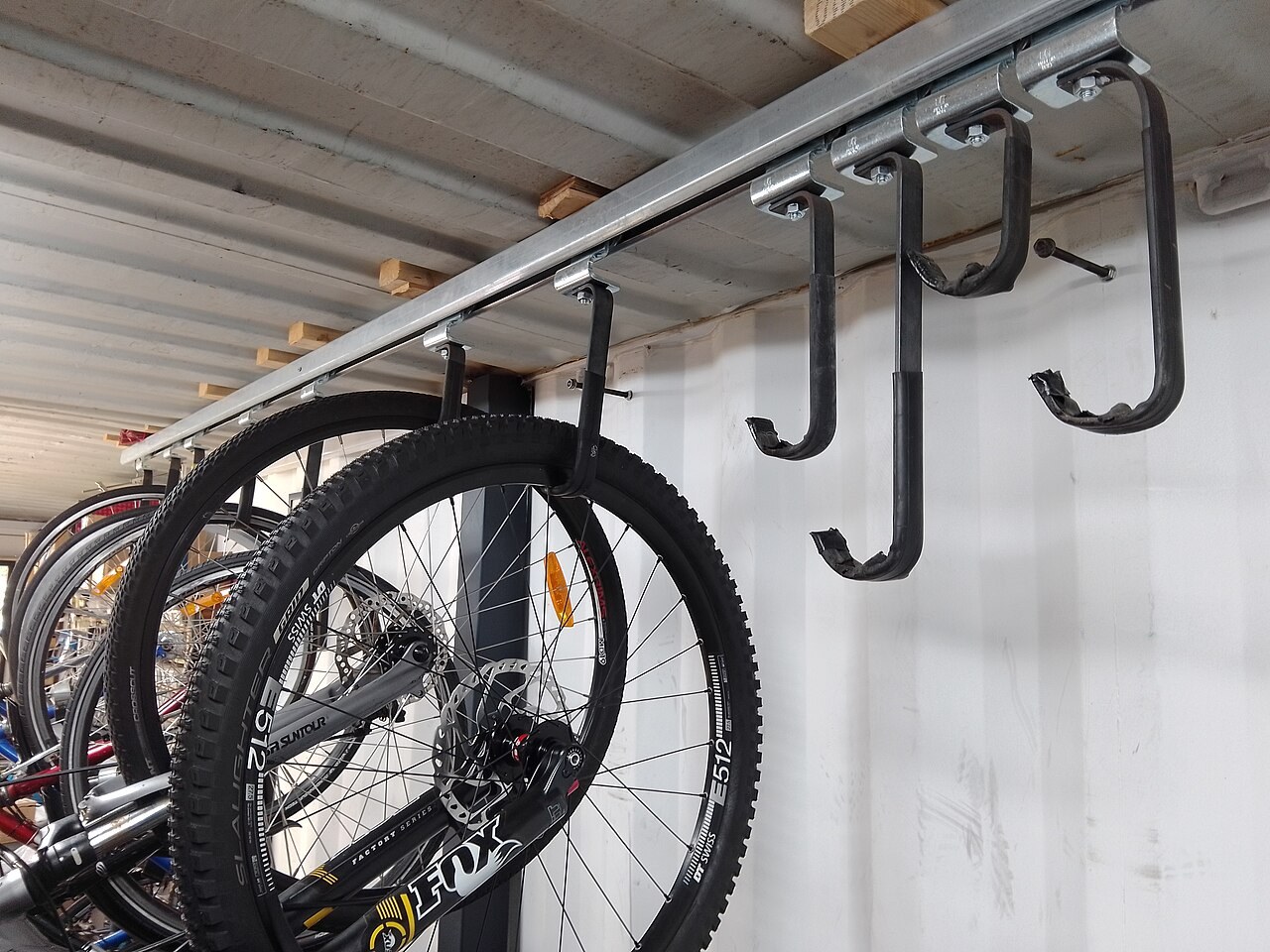
When travelling with bicycles, the property becomes the starting point for every ride. Bike storage may mean an open rack or a lockable room. Ask about the exact arrangement, particularly for heavy e-bikes, children’s bicycles or a trailer. A dry-looking storage photograph does not establish usable access.
Check the approach as well
Ask about steps, doorway width and tight turns between the street and storage room. A cellar may offer shelter but require carrying a heavy bicycle every day. With several bikes, the actual clear floor area matters. Establish whether a trailer needs detaching and whether your bicycle remains reachable without repeatedly moving other guests’ equipment.
Separate shelter and permission
A roof protects against rain but says nothing about secure attachment. Ask about fixed locking points and who has access. Bringing your own locks remains sensible. Take bicycles into living spaces only with explicit agreement. For e-bikes, clarify permitted charging arrangements separately and follow manufacturer instructions and the property’s requirements.
Make each departure easier
Keep helmets, locks and a small repair kit in a consistent place without blocking passageways. Before the first ride, check the connection from the house to the intended cycling network. Barnim Nature Park guidance helps with choosing appropriate routes considerately. Sheltered storage does not replace checking tyres, brakes and weather before setting out.
Common questions
Is a shared shed necessarily secure?
No. Access and locking options matter, and absolute protection against theft cannot be promised.
Which trailer measurements help?
Its width and length in the intended storage configuration, plus the narrowest point along the access route.