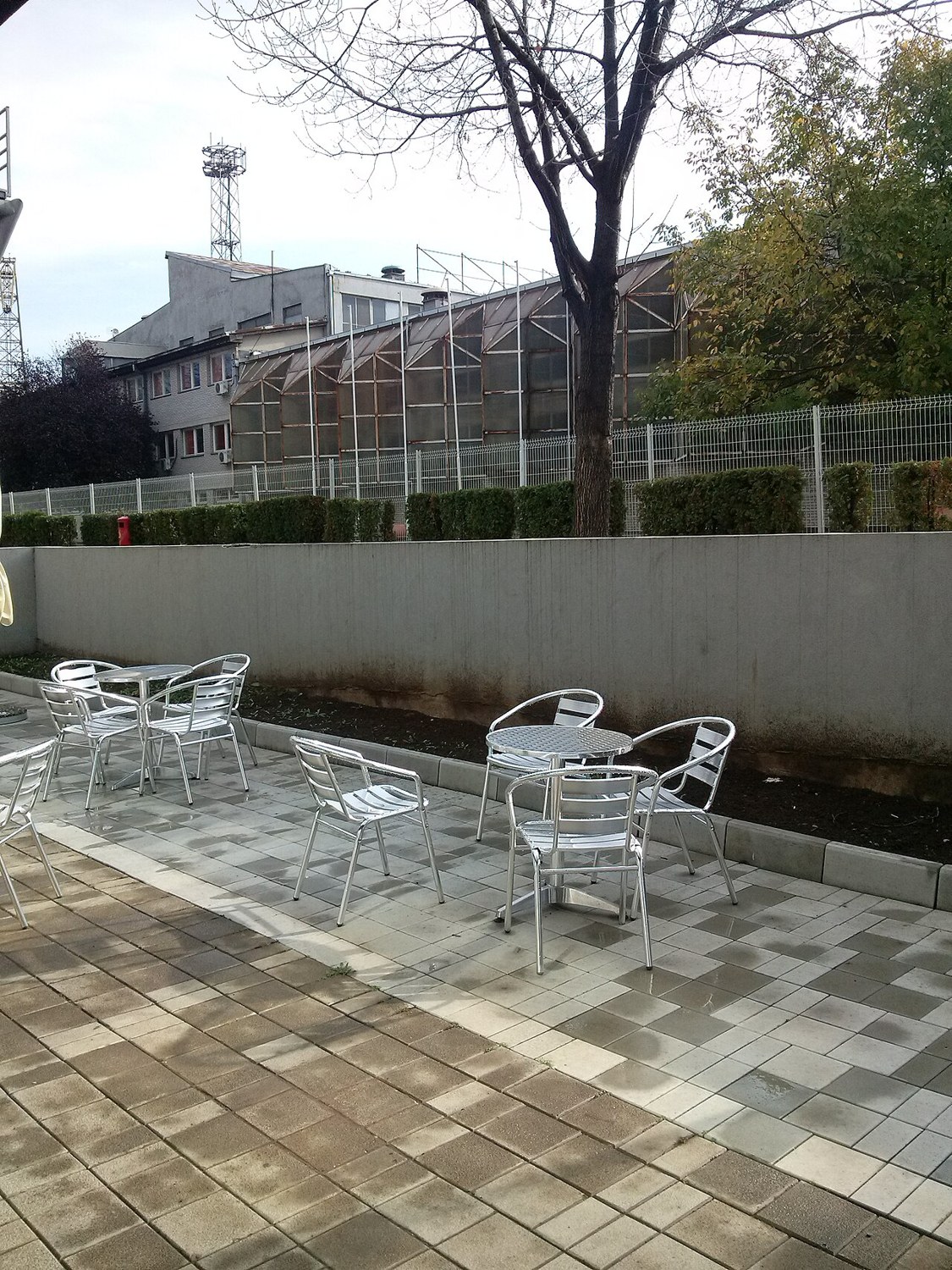
A terrace may serve as a breakfast spot, outdoor reading corner or evening meeting place. Photographs make these uses look similar, but each needs different conditions. Check usable seating, the pattern of sun and the separation from other guests instead of judging the space only by its size.
Furniture for the whole group
Four loungers do not provide four comfortable dining places. Ask about table size and suitable chairs for your party. Check the route from the kitchen, especially where stairs or narrow doors intervene. A balcony may comfortably hold two cups of coffee without accommodating a full meal and extra belongings at the same time.
Ask separately about sun and shelter
Direction offers an initial clue, but neighbouring buildings and trees alter shade. Ask about a parasol or awning and its wind-related operating instructions. A covered terrace is not automatically rainproof. Flexible shade helps on hot days, while a sheltered indoor spot can be a better alternative on a cool evening.
Assess privacy realistically
Screening on one side says little about facing windows or a shared access route. Ask whether the outdoor space is exclusive and which paths pass it. Follow evening house rules. Do not move furniture onto circulation routes or boundaries without agreement. A small, well-equipped spot may work better than a large area with unsuitable furniture.
Common questions
Does a south-facing terrace get sun all day?
Not necessarily. Buildings, trees and season influence the actual light.
May I barbecue there?
Only where property rules, appropriate equipment and local requirements allow it. A terrace alone is not permission.